Mini Split Service in Crystal City, MO
Stay worry-free with mini split service in Crystal City, MO. Sheet Metal Contractors, Inc. delivers expert installs, maintenance & system repairs. Call us!

Mini Split Service in Crystal City, MO
Ductless mini split service in Crystal City, MO, from Sheet Metal Contractors, Inc., is a smart choice for homeowners and businesses seeking zoned comfort, energy efficiency, and hassle-free installation. For older St. Louis area buildings or retrofit projects that cannot accommodate new ductwork, mini splits provide precise temperature control, reduced energy waste, and quieter operation. This page outlines what a professional mini split service looks like in our local climate, common problems you’ll see in the region, the assessment and installation process for single‑ and multi‑zone systems, routine maintenance plans, typical diagnostic and repair services, warranty considerations, and practical guidance on obtaining an accurate estimate or scheduling service.
Why Mini Splits Make Sense in Crystal City, MO
- Hot, humid summers and cold winters in the St. Louis region make efficient, zoned heating and cooling important to control energy bills and comfort.
- Older homes, additions, finished basements, garages converted to living space, and buildings with limited attic or crawlspace access are ideal mini split candidates.
- Mini splits avoid duct losses, provide targeted comfort for problem rooms, and are excellent for adding HVAC to spaces without invasive construction.
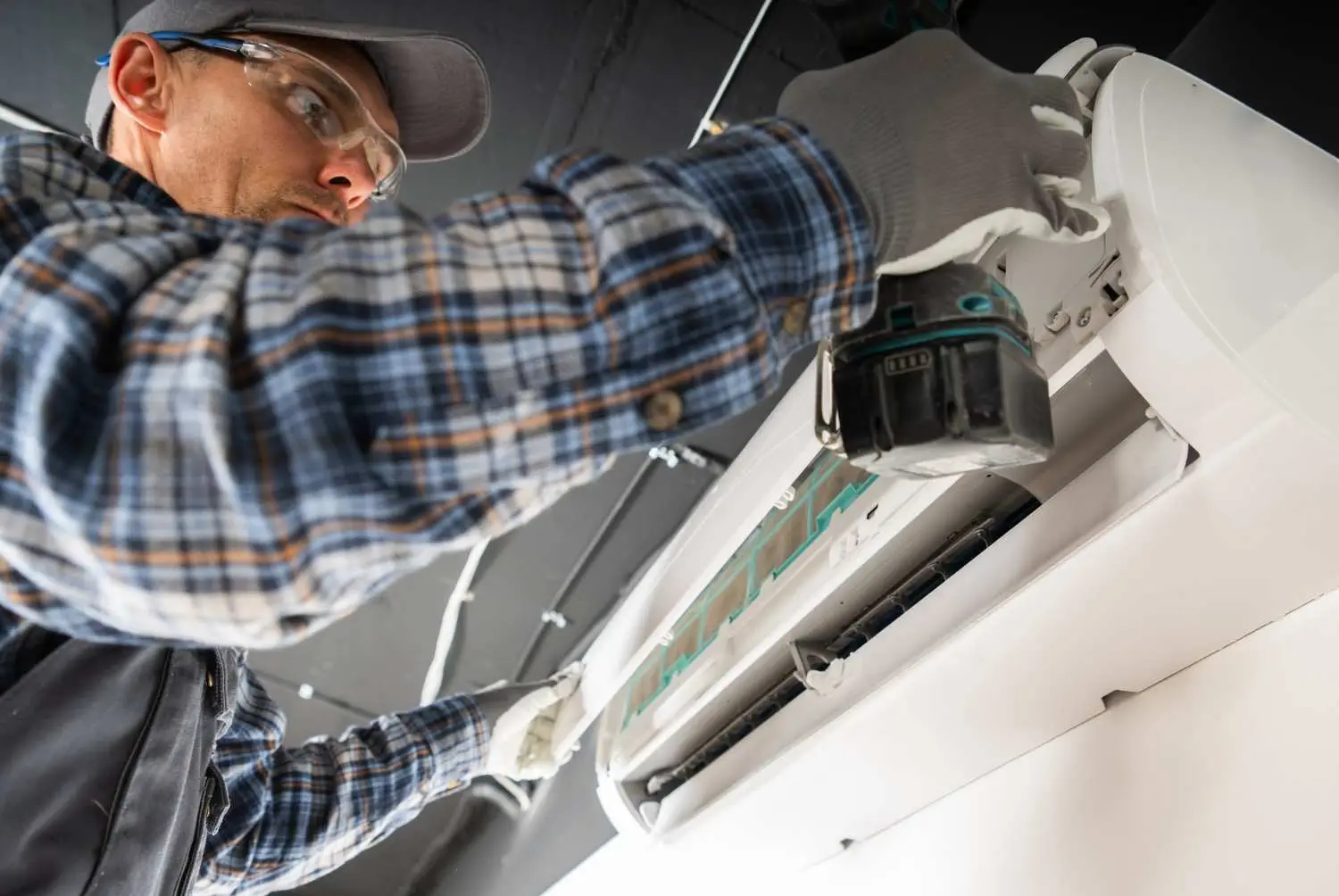
Common Mini Split Service Types and Issues in the Area
Common mini split service requests in Crystal City, MO include:
- New system site surveys and accurate sizing for single- and multi-zone installations.
- Retrofit installations where adding ductwork is impractical.
- Seasonal start‑up checks and winterizing for heat pump models.
- Routine maintenance, including filter and coil cleaning, refrigerant level checks, and electrical inspections.
- Diagnostics and repairs for refrigerant leaks, compressor or fan motor failures, communication errors between indoor and outdoor units, and frozen evaporator coils.
- Efficiency tune‑ups to restore performance after heavy pollen, cottonwood, or dust buildup common in local spring and fall seasons.
Initial Site Assessment and Unit Sizing
A proper mini split service begins with a thorough site assessment tailored to local building types:
- Room-by-room load calculation (cooling and heating) that considers square footage, ceiling height, window orientation, insulation levels, occupant use, and local climate data.
- Evaluation of indoor unit locations for airflow, aesthetic considerations, and ease of maintenance.
- Assessment of outdoor unit placement for clearances, noise considerations, and refrigerant line routing.
- For multi-zone systems, evaluation of indoor/outdoor combinations and VRF/VRV compatibility if larger commercial loads are involved.
Sizing correctly avoids underperformance, short cycling, and reduces the risk of premature equipment failure.
Installation: Single‑Zone Vs Multi‑Zone Systems
Installation steps are similar in principle but vary in complexity:
Single‑Zone Installation
- Choose an indoor head style (wall‑mounted, ceiling cassette, floor console) based on the room layout.
- Mount the indoor unit and route a small 3-inch to 6-inch penetration to the exterior for refrigerant lines, condensate drain, and communications cable.
- Position and secure the outdoor condensing unit on a concrete pad or vibration‑isolating brackets.
- Evacuate, charge, and test the refrigerant circuit to manufacturer specifications.
- Commission system controls, verify airflow and temperature differentials, and demonstrate basic operation.
Multi‑Zone Installation
- Coordinate matching of multiple indoor heads to a single outdoor condensing unit or multi‑compressor VRV system.
- Plan refrigerant manifold routing and pressure testing for multiple branches.
- Balance controls so each zone responds independently and the outdoor unit capacity stages correctly.
- Commissioning includes verifying simultaneous operation across zones and fine‑tuning refrigerant charge for each line.
All installations should follow manufacturer guidelines, union quality standards, and local code for electrical and refrigerant handling.
Maintenance Plans and Routine Service Tasks
Regular maintenance preserves efficiency and extends equipment life, especially in the St. Louis climate, where pollen and seasonal debris are common.
Typical routine tasks included in maintenance plans:
- Filter inspection and cleaning or replacement (every 1–3 months depending on usage and indoor air quality).
- Indoor coil and blower compartment cleaning to prevent airflow restriction and microbial growth.
- Outdoor coil cleaning and debris removal to maintain heat transfer.
- Refrigerant pressure checks and leak detection; repair and recharging as needed.
- Electrical connections, contactor, and capacitor tests.
- Condensate drain clearing and inspection to prevent overflow and water damage.
- Control firmware or thermostat checks and zoning verification.
Recommended frequency: at minimum annual service prior to summer cooling and a fall check for heat pump models; higher‑use environments may require quarterly service.
Common Diagnostics and Repair Services
Technicians frequently handle:
- Lack of cooling/heating: identify refrigerant leaks, compressor faults, or airflow restrictions.
- Short cycling or frequent on/off: incorrect sizing, low refrigerant, or control issues.
- Frozen indoor coil: low airflow, refrigerant issues, or blocked condensate drains.
- Outdoor unit not starting: electrical faults, capacitors, or compressor failures.
- Communication errors between indoor and outdoor units: wiring issues or control board replacements.
- Refrigerant leak repair and recovery, followed by pressure test and correct recharge.
- Replacement of fan motors, PCB boards, reversing valves, and other components with OEM parts to maintain warranty compliance.
Technicians should document diagnostics, recommended repairs, and parts required so owners fully understand service scope and long‑term implications.
Warranty and Parts Information
- Most manufacturers provide a parts and compressor warranty; labor warranties vary by installer.
- Using OEM replacement parts preserves manufacturer warranty coverage and long‑term reliability.
- Confirm the length and coverage of both parts and labor warranties before completing major repairs or upgrades.
- For locally installed systems, consider records retention for warranty claims and seasonal maintenance verification.
How to Prepare for an Estimate or Schedule Service
To speed up accurate estimates and efficient scheduling, have the following ready:
- Photos of the proposed indoor space(s), including windows, doors, and ceiling heights.
- Building age, insulation levels, and whether the space is an addition or retrofit.
- Any existing HVAC equipment information (model numbers, approximate age).
- Desired zoning preferences (which rooms need independent control).
- Utility usage concerns or priority for efficiency vs. budget.
A knowledgeable union‑based St. Louis HVAC team will use this information to perform a detailed assessment, produce a right‑sized proposal, and outline installation timelines that fit the building type and local permitting requirements.
Upgrade to Efficient Comfort Today
Ready to enjoy year-round comfort and energy savings with a reliable ductless mini split system? At Sheet Metal Contractors, Inc., our skilled technicians provide expert service, from installation to maintenance and repairs, ensuring your system runs at peak performance. Whether you’re upgrading an older space or adding zoned comfort to your home or business, we deliver solutions designed to fit your needs.
Learn more about our trusted team on our About Us page, and see why homeowners and businesses in Crystal City recommend us on our Reviews page. Contact us today to schedule your mini split service in Crystal City, MO, and experience the difference.
our service
areas