HVAC Installation in Murphy, MO
Upgrade your comfort with HVAC installation in Murphy MO by Sheet Metal Contractors, Inc. Energy-efficient systems installed right. Call for free estimate!

Replacing or installing a new HVAC system in Murphy, MO is a major decision for any homeowner. With hot, humid summers and cold winters in the St. Louis area, the right system keeps your home comfortable, controls humidity, and reduces energy costs. At Sheet Metal Contractors, Inc., we provide a complete HVAC installation process tailored to Murphy homes—from system selection and load calculations through ductwork or ductless options, testing and balancing, commissioning, and warranty and maintenance plan choices.
Why Proper HVAC Installation Matters in Murphy, MO
Missouri weather places both high cooling and heating demands on homes. High summer humidity increases cooling load and can encourage mold growth when ventilation is inadequate. Older neighborhood homes near Murphy often have legacy duct runs, undersized equipment, or inadequate insulation that undermine system performance. Proper installation that includes accurate sizing, well-designed ductwork or ductless zoning, and thorough commissioning prevents short cycling, uneven temperatures, high energy bills, and indoor air quality problems.
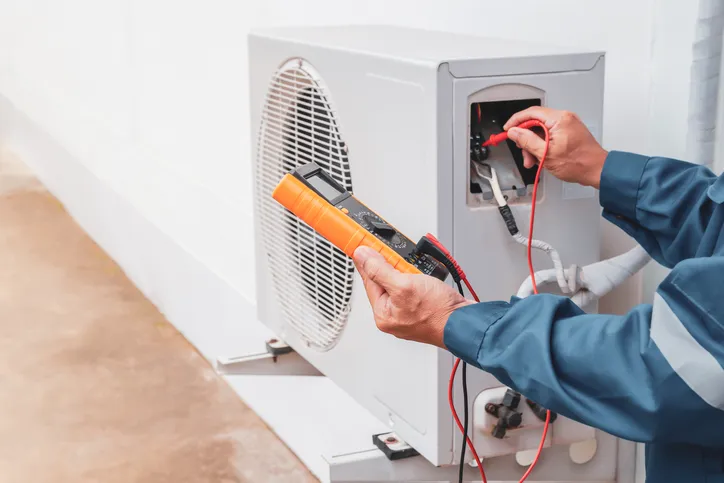
Common HVAC installation types and issues in Murphy
- Central ducted systems: Best for homes with existing ductwork. Common issues include leaky ducts, poor sealing, inadequate insulation in crawlspaces, and mismatched equipment capacity.
- Ductless mini-split systems: Ideal for retrofits, additions, or homes without usable ductwork. Benefits include zoned comfort and reduced energy loss. Challenges can include aesthetic placement and ensuring correct line-set routing.
- Heat pump systems and geothermal: Efficient for both heating and cooling in Missouri’s climate. Proper ground loop design or air-source selection is essential to achieve expected efficiencies.
- Zoned systems and VRV/VRF: Great for multi-level homes or spaces with different occupancy patterns. Requires careful controls and load coordination.
- Common installation problems: Oversized or undersized equipment, incorrect refrigerant charge, imbalanced airflow, poor thermostat placement, and inadequate ventilation leading to excess humidity.
System selection and load calculations
Selecting the right system begins with an industry-standard load calculation. We base recommendations on:
- Manual J load calculation: Determines your home’s heating and cooling loads by accounting for square footage, insulation levels, window types, orientation, occupancy, and local climate conditions in Murphy.
- Manual D duct design: When installing or replacing ducts, Manual D ensures proper sizing and layout to deliver balanced airflow to each room.
- Manual S equipment selection: Matches the calculated loads to an appropriately sized heat pump, furnace, or air conditioner while considering efficiency ratings and modulation options.
Accurate load calculations prevent oversizing that causes short cycling and comfort complaints, and avoid undersizing that leaves your home under-conditioned on extreme temperature days.
Ductwork versus ductless — choosing what fits your home
- Ducted systems:
- Advantages: Whole-home distribution, compatible with central filtration and humidification, familiar controls.
- Key installation steps: Assess existing ducts for leaks and insulation, replace or fabricate new sheet metal when needed, seal and insulate trunks, and rebalance branch runs.
- Best for: Homes with accessible existing ducts or where whole-home ventilation and filtration are priorities.
- Ductless systems:
- Advantages: Zone-by-zone control, lower installation disruption, high efficiency for targeted spaces.
- Key installation steps: Plan head locations for comfort and aesthetics, route refrigerant lines and condensate, and integrate controls for multi-zone coordination.
- Best for: Additions, older homes without ducts, and rooms that need individualized temperature control.
The choice often depends on home layout, renovation scope, and long-term efficiency goals. In Murphy, many retrofit projects benefit from ductless solutions due to older framed construction and limited attic or crawlspace access.
Installation steps: what to expect
- Initial inspection and design: Document home layout, existing systems, insulation levels, and utility types. Perform load calculations and present system options.
- Pre-install preparation: Order equipment, coordinate lead times, and prepare the site for installation (clear access, protect flooring).
- Ductwork fabrication or line-set routing: Fabricate and install sheet metal ducts when needed, or prepare for ductless line sets and condensate management.
- Equipment installation: Set outdoor unit, install indoor coil or furnace, connect refrigerant lines, electrical, gas, and condensate systems.
- Controls and thermostat setup: Install programmable or smart thermostats, zoning controls, and integrate ventilation or IAQ devices as specified.
- Testing, balancing, and commissioning: See next section for details.
- Final inspection and homeowner orientation: Walk through system operation, filters, and recommended maintenance schedule.
Typical residential installations vary in duration depending on scope. Simple equipment swaps may be completed in a day, while new ductwork, geothermal, or multi-zone installations can take several days to a week.
Testing, balancing, and commissioning
Proper commissioning ensures the system performs to design and manufacturer expectations. Key commissioning steps include:
- Refrigerant charge verification: Ensure correct refrigerant levels for peak efficiency and longevity.
- Airflow testing and balancing: Measure CFM at supply and return registers, adjust fan speeds and dampers to deliver designed airflow to each zone.
- Static pressure checks: Confirm duct system resistance is within manufacturer specifications to avoid blower strain.
- Temperature split and sequencing: Verify correct temperature differential across coil and proper system sequencing during start-up.
- Combustion safety tests: For gas furnaces, test flue draft and CO levels to ensure safe operation.
- Controls calibration: Calibrate thermostats, zoning dampers, and any communicating controls.
- Indoor air quality checks: When included, verify operation of humidifiers, UV lights, and filtration systems.
A thorough commissioning report documents findings, any adjustments made, and recommendations for ongoing maintenance.
Warranty and maintenance plan options
- Manufacturer warranties: Typically cover major components such as compressors and heat exchangers. Accurate installation and commissioning are often required to keep full warranty benefits.
- Labor and workmanship warranties: Cover installation-related issues for a defined period. Proper documentation of commissioning and system start-up supports warranty claims.
- Planned maintenance plans: Seasonal tune-ups (spring and fall) generally include filter checks, refrigerant level inspection, burner and heat exchanger checks, airflow and thermostat verification, and condensate drain cleaning. Regular maintenance:
- Extends equipment life
- Preserves energy efficiency
- Helps maintain warranty eligibility
- Reduces risk of mid-season failures
Maintenance frequency depends on system type and household factors such as pets, allergens, or occupancy patterns. Many homeowners in the Murphy area add indoor air quality services like filter upgrades, UV lights, or whole-home humidity control to address pollen and summer humidity.
Long-term benefits of professional HVAC installation
A professionally designed and installed HVAC system provides:
- Consistent comfort and humidity control throughout the year
- Lower energy bills through right-sized equipment and proper duct design
- Improved indoor air quality via correct ventilation and filtration integration
- Longer equipment life and reduced emergency repairs with scheduled maintenance
- Peace of mind from documented commissioning and warranty compliance
As a family-owned, union-based contractor with deep St. Louis area experience and in-house sheet metal capabilities, Sheet Metal Contractors, Inc. emphasizes precise design, professional installation practices, and attention to local climate effects that influence long-term system performance in Murphy, MO. Proper planning and installation ensure your new HVAC system meets comfort needs, efficiency goals, and durability expectations for years to come.
Trust Sheet Metal Contractors, Inc. for Your HVAC Installation in Murphy, MO
When it comes to reliable HVAC installation in Murphy, MO, homeowners consistently choose Sheet Metal Contractors, Inc. for precision, experience, and lasting comfort. As a trusted family-owned company serving the St. Louis area, we take pride in delivering tailored solutions that keep your home efficient and comfortable all year long. Don’t just take our word for it—see what others are saying on our customer reviews page. Ready to take the next step? Contact us today through our service request form and let our experts design the perfect HVAC solution for your home.
our service
areas